
How Many Grams of Fat Per Day is Right for You?
Understanding Dietary Fat
You might be wondering how many grams of fat per day align with your health goals. Fat is often misunderstood, yet it’s a crucial part of our diet. It provides energy, supports cell growth, and helps absorb some nutrients. But how much is enough?
Calculating Your Fat Needs
To determine your daily fat intake, start by knowing your total caloric needs. Generally, 20% to 35% of your daily calories should come from fat. For instance, if you're on a 2,000-calorie diet, that's about 44 to 78 grams of fat per day.
Different Goals, Different Fat Needs
Your goals affect how many grams of fat you should consume daily:
- Weight Loss: Aim for the lower end of the fat spectrum (20% of your daily calories). This helps reduce overall calorie intake.
- Maintenance: Keep a balanced intake around 30%. This supports energy without excess.
- Muscle Gain: You might need closer to 35%. Fat provides energy and supports hormone production essential for muscle growth.
Types of Fats Matter
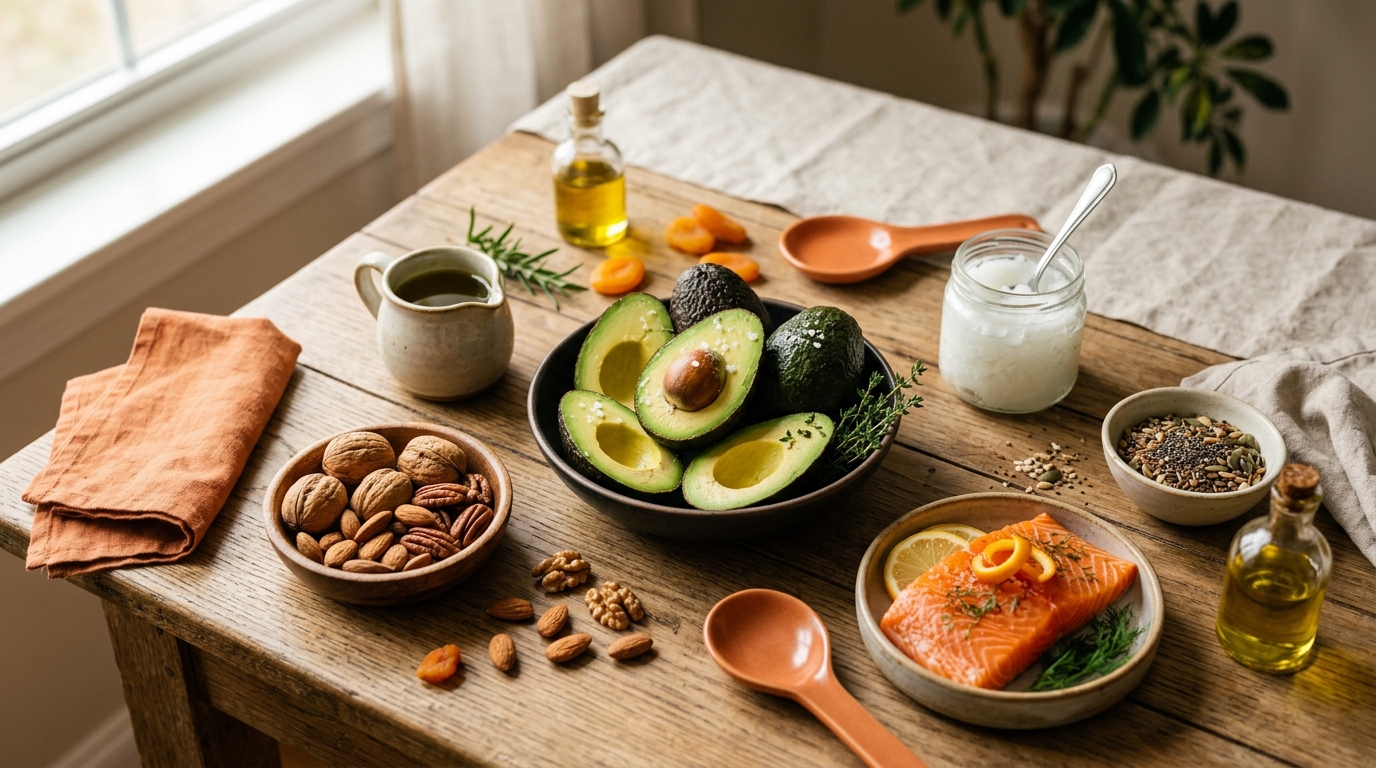
Not all fats are created equal. Prioritize healthy fats like:
- Monounsaturated Fats: Found in olive oil, avocados, and nuts.
- Polyunsaturated Fats: Include omega-3 and omega-6 fatty acids found in fish, flaxseeds, and walnuts.
- Saturated Fats: Limit these to less than 10% of your daily calories. Found in red meat, butter, and cheese.
"The type of fat you eat can be as important as the amount. Choose wisely to support overall health."
Monitoring Fat Intake with Calofay
Tracking your fat intake doesn’t have to be tedious. With the Calofay app, you can log meals effortlessly using photos, voice memos, or barcodes. The app helps you keep tabs on your macros, ensuring you meet your fat goals without overthinking.
Adjusting Fat Intake Based on Activity Levels
Your activity level also plays a role. Active individuals may require more fat for energy, while sedentary lifestyles might benefit from less. Calofay's AI coach adjusts recommendations based on your activity levels, ensuring you get the precise amount of fat you need.
Fat's Role in a Balanced Diet
Remember, fats are just one part of the macro equation. Balance them with protein and carbohydrates for optimal nutrition. For instance, a keto diet, which is high in fat, might not suit everyone. Calofay offers guidance and recipes to fit various dietary preferences and goals.
Conclusion
Understanding how many grams of fat per day suits your specific goals can significantly impact your health journey. Whether you're aiming to lose weight, maintain, or build muscle, adjusting your fat intake accordingly is key. Monitor your progress with tools like Calofay to stay on track.
Frequently Asked Questions
How many grams of fat per day should I eat to lose weight?
For weight loss, aim for about 20% of your daily caloric intake from fat. If you're on a 2,000-calorie diet, that’s roughly 44 grams of fat per day.
Can I eat more fat if I'm exercising regularly?
Yes, active individuals might need more fat for energy. Adjust your intake based on activity level, aiming closer to 30-35% of your calories from fat.
Is it bad to eat too little fat?
Consuming too little fat can affect hormone production, nutrient absorption, and overall energy levels. It’s essential to maintain a balanced intake of healthy fats.
Ready to turn this into results?
Take the 2-minute Calofay quiz and get your personal calorie & macro plan — with 500+ healthy recipes, an AI coach, and a 15-day money-back guarantee. It's the easiest way to start.
Ready to start your journey?
Answer 13 quick questions and get your custom plan in 2 minutes.
Read next
All articles →
Daily Fiber: Your Essential Guide to Intake & Sources
Discover how much daily fiber you need and learn the best sources to enhance your diet.
Daily Fiber: How Much You Need & Where to Find It
Discover how much daily fiber you need and the best sources to improve digestion and overall health.
Animal vs Plant Protein: What's Best for Muscle?
Explore the benefits of animal vs plant protein for muscle building, and find out which is best for your fitness goals.